


The Style of photography or whether to
manipulate or not is up to the individual. Early on in my
career I learned the basics of composition and lighting,
these two points are the primary rules or guides that I
follow next is the exposure and colour with contrast also
being a factor.
These are Guides not strict Rules but I have also learned
that if you are going to break them you better do it
Well. I have always considered myself a creative
pictorial photographer, why the addition of the word creative
you may ask. Simple I seldom produce a straight image
Some people specialize in different genres of photography i.e.. Pictorial, nature, sports, photo-journalism etc. mostly self explanatory but others do high key or low key this often confuses the viewer as they do not know what the terms imply basically High Key is very light coloured usually low contrast pictures normally with few colours and uses unnaturally bright lighting to blow out most or all harsh shadows in an image and the Low key is Dark with very little strong colours a low-key is usually dramatic and full of mystery, both very hard to do well. Problem is that some of these authors take it too far with the High key just being totally washed out and the Low key applied to every dark over exposed flat picture they ever took, a balance is needed in every Picture. I have always tried to be a Pictorial Photographer with a dash of Creativeness thrown in, I may venture into Nature occasionally but am by no means a Nature Photographer.
As stated I have always considered myself simply as a "Creative Pictorial" photographer , not a Surreal, Composite Artist, post modern, avant-garde photographer proponent of minimalism or any other fancy name you want to put on it, Although at some stage my work will fall into those categories
See larger image by clicking on it
then use browsers back button to return

Above an example of a composite/multiple image/surreal image using manipulated photographs

Above a straight image with little or no manipulation other than staging the duster on my part. I had just finished giving this ornament a fresh lick of paint when I got the idea to use the duster to add a bit of sparkle, so when the paint was dry this was the result. but there is nothing to stop you becoming a creative photographer whether you take straight or you manipulate your end results.


Above are thumbnails of some of my straight and some not so straight images which appeared on Google search. These are but a few of the images on the site listed under +25 pages
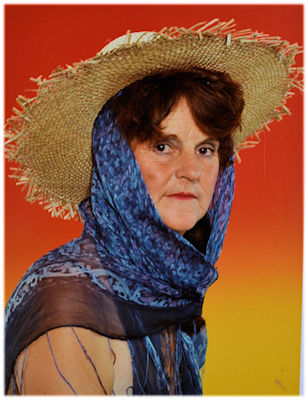
A straight image with no manipulation at all some people do not like older citizens portrayed with such a bright backdrop but this lady was at a photographic session her grand child was having and begged me to take one of her like this, she was over the moon when she saw the end result.. a second version of this can be seen on the photo-art. and the elderly lady is a slightly manipulated image on the portraits page

Above an obvious manipulated image, you would not believe it if you saw the original but this again was an inspirational photograph created from almost a mundane image, one of my more complex manipulations
AT ANY TIME YOU CAN GO TO THE SITEMAP PAGE

Above what can best be described as a graphic image as it is a combination of techniques and several images, it is not meant to represent mainstream photography but what can be done to make an image which makes you think what all is there in it.
Here is a Tip
Move the mouse over the image below for a
tip:
 What is the correct way?
Well for me that is a grey area because every image
should be as the "AUTHOR" wants it but
there are several "no, no's" which in
normal cases I stick to but it is up to you. A frame or
border can be added if needed this is a matter of choice,
but please make it suits.
What is the correct way?
Well for me that is a grey area because every image
should be as the "AUTHOR" wants it but
there are several "no, no's" which in
normal cases I stick to but it is up to you. A frame or
border can be added if needed this is a matter of choice,
but please make it suits.
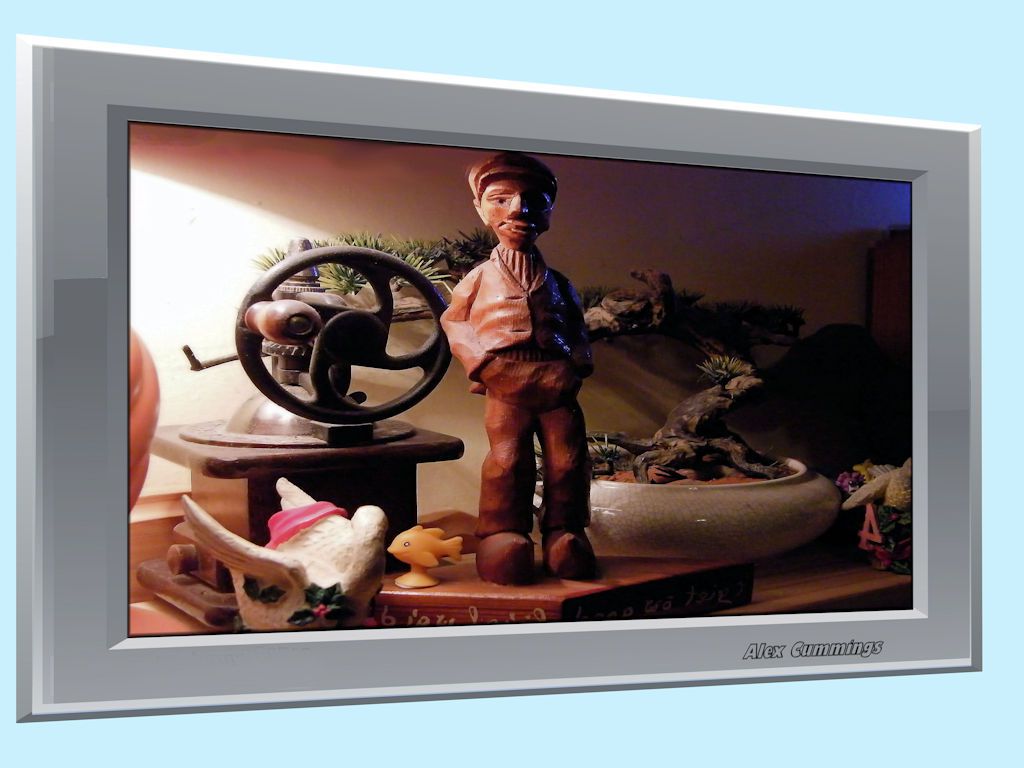
Framing is another way to display your prints, fortunately gone are the days when framing was restricted to a small white rectangular border round your print neither do the dimensions need to be contained within four right angles things like this are being quite common.
I have used quite a lot of framing in this site, it was always my practice to mount my pictures on stiff card but from an early stage I used mounts of what I considered a complimentary colour and often glued the photograph on a slightly larger piece of white or black card before glue it to the coloured card, I found that grey was the most successful so I had various shades of grey to work with. I did not limit myself too grey and neither should you
 An other
thing which can be done is to darken an area of the photo
to put the emphasis on to the remaining colourful parts of
the image. If I had been reporting the activity I would
probably have left the background in to show that it was
well supported but as I was not interested in distractions
I darkened the area.
An other
thing which can be done is to darken an area of the photo
to put the emphasis on to the remaining colourful parts of
the image. If I had been reporting the activity I would
probably have left the background in to show that it was
well supported but as I was not interested in distractions
I darkened the area.
 On the
right is an old favourite of mine since it was taken
against a neutral infinity curve and used a cardboard lamp
post a half round yellow plastic flash cover. The
light was put in in the dark room along with a dark
surround this was changed to the swirling light for the
digital one as well as giving a little extra canvas on the
right. This was my introduction to Layers.
On the
right is an old favourite of mine since it was taken
against a neutral infinity curve and used a cardboard lamp
post a half round yellow plastic flash cover. The
light was put in in the dark room along with a dark
surround this was changed to the swirling light for the
digital one as well as giving a little extra canvas on the
right. This was my introduction to Layers.

ABOVE IS A MORE MODERN VERSION OF THE SMALLER VERSION ABOVE THIS ONE NOTICE BACKGROUND CHANGED RAIN ADDED AND UMBRELLA ON LAMP POST.
Below this one is an example of taking an older property and trying to make it look even older by giving it a old parchment type of look

Below an example of what can be found on the page dealing with surreal images both this and the banner image were taken through the windscreen of my car and no other filter was used the only effects which were altered were vibrance, brightness and contrast.

NOTE THE IMAGES BELOW ARE NOT MINE
....
I have often been asked if anyone inspired me and I think if anyone did it was Sam Haskins. a British based photographer, born and raised in South Africa. He started his photographic career in Johannesburg and moved to London in 1968. Haskins although best known for his contribution to nude photography and in-camera image montage, who as well as producing lots of quality B&W photos produced some very colourful colour work. I had a book of his with several multiple image shots and I liked that so I strived to do the same in my darkroom with one major difference I did not want my multiple images to be readily noticeable and think I succeeded. Above is a collection of the different styles of colour work by Sam Haskins, Sam did the multiple images in the Camera and I did it in the Darkroom, of course it is much easier now in the digital age. I have also admired the work of David Hamilton, I tried for a long time early in my career to duplicate his soft focus technique but never was happy with the results. Freeman Patterson also inspired me especially with one he took of a sunrise in New Brunswick. Local photographers? for colour and size of his prints must have been Robert Owen. As I said at the beginning I have always tried to be a Pictorial Photographer with a dash of Creativeness thrown in


Other Pages on the site include Information Boats, Cars,
Comp-n-clip
Composites
Composites 2
Creative
Different ? Examples, Flowers, Framing high or low key.
How to Landscapes,
Landscape-n-Nature Manipulation,
Minimalism More examples, Multiple images, Nature, Nature
Wildlife Photo-art, Portraits Sliding images, Straight, Surreal Surreal-pg.2 Rules, Windows
and the page index or
the site map

This page has been checked and given the all clear both for CSS and HTML 5 programming
Photographs and graphics are ©
& belong to Alex Cummings unless otherwise stated More
photographs can be seen at https://plus.google.com/collection/ULgVRE
or at https://www.facebook.com/alex.cummings.1940/


